Want to unlock explosive growth for your business? A smart, data-driven B2B marketing strategy isn’t just helpful—it’s essential. In 2024, standing out means going beyond cold calls and generic emails. It’s about precision, personalization, and performance.
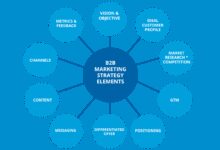
1. Understanding the Core of B2B Marketing Strategy

At its heart, a B2B marketing strategy is a comprehensive plan that guides how a business promotes its products or services to other businesses. Unlike B2C marketing, which often appeals to emotions and immediate gratification, B2B decisions are typically rational, data-backed, and involve multiple stakeholders.
What Sets B2B Apart from B2C?
The fundamental difference lies in the buyer’s journey. In B2B, the sales cycle is longer, the stakes are higher, and the relationships are more consultative. A successful B2B marketing strategy must account for complex decision-making units (DMUs), where procurement teams, technical evaluators, and C-suite executives all influence the final purchase.
- B2B buyers seek ROI, scalability, and risk mitigation.
- Content must be educational, not just promotional.
- Trust and credibility are non-negotiable.
Key Components of a Winning B2B Marketing Strategy
A robust B2B marketing strategy integrates several core elements: target audience definition, value proposition clarity, channel selection, content planning, and performance measurement. Without these, even the most creative campaigns fall flat.
- Target Audience: Who are your ideal customers? Use firmographics (industry, company size, revenue) and technographics (software stack, tech maturity).
- Value Proposition: Why should a business choose you over competitors? Focus on outcomes, not features.
- Channels: From LinkedIn to industry webinars, choose platforms where decision-makers spend time.
“Marketing is no longer about the stuff you make, but the stories you tell.” — Seth Godin
2. Building a Data-Driven B2B Marketing Strategy
In today’s digital landscape, intuition alone won’t cut it. A modern B2B marketing strategy thrives on data. From customer behavior analytics to predictive modeling, data informs every stage of the marketing funnel.
Leveraging Customer Insights and Analytics
Start by collecting first-party data through website interactions, email engagement, and CRM integrations. Tools like Google Analytics 4 and Salesforce help track user journeys and identify high-intent leads.
- Monitor time-on-page for key content like case studies and pricing pages.
- Use heatmaps (via tools like Hotjar) to see where prospects engage most.
- Track form abandonment rates to optimize conversion paths.
Implementing Predictive Lead Scoring
Predictive lead scoring uses machine learning to rank prospects based on their likelihood to convert. By analyzing historical data—such as email opens, content downloads, and website visits—marketing and sales teams can prioritize high-value leads.
- Integrate with marketing automation platforms like HubSpot or Marketo.
- Define behavioral and demographic scoring criteria (e.g., job title + whitepaper download).
- Continuously refine models as new data flows in.
3. Mastering Account-Based Marketing (ABM) in Your B2B Strategy
Account-Based Marketing (ABM) is one of the most powerful evolutions in B2B marketing strategy. Instead of casting a wide net, ABM focuses on targeting high-value accounts with personalized campaigns.
What Is ABM and Why It Works
ABM treats individual accounts as markets of one. It aligns marketing and sales teams to create hyper-targeted content, ads, and outreach for specific companies. According to ABM Leadership Alliance, 87% of marketers report that ABM delivers higher ROI than other marketing approaches.
- Reduces wasted spend on low-fit leads.
- Strengthens relationships with key decision-makers.
- Shortens sales cycles by increasing relevance.
Steps to Launch a Successful ABM Campaign
Implementing ABM requires a structured approach:
- Identify Target Accounts: Use firmographic, technographic, and intent data to select high-potential companies.
- Research Stakeholders: Map out influencers, champions, and blockers within each account.
- Create Personalized Content: Develop tailored case studies, demo videos, or ROI calculators.
- Orchestrate Multi-Channel Outreach: Combine LinkedIn ads, direct mail, email sequences, and virtual events.
- Measure Engagement and Revenue Impact: Track account engagement scores and pipeline velocity.
“ABM isn’t a tactic—it’s a go-to-market strategy.” — Sangram Vajre, Co-Founder of Terminus
4. Content Marketing as the Backbone of B2B Marketing Strategy
No B2B marketing strategy is complete without a strong content engine. In fact, 91% of B2B marketers use content marketing to reach customers, according to the Content Marketing Institute.
Creating High-Value, Educational Content
B2B buyers are self-educating earlier in the journey. Your content should answer their questions before they even ask. Focus on formats that build trust and authority:
- Whitepapers: Deep dives into industry challenges and solutions.
- Case Studies: Real-world proof of your product’s impact.
- Webinars: Interactive sessions that position your team as experts.
- E-books: Comprehensive guides that capture leads.
Optimizing Content for Each Stage of the Buyer’s Journey
Not all content serves the same purpose. Align your content with the three key stages of the buyer’s journey:
- Awareness Stage: Blog posts, infographics, and social media content that address pain points (e.g., “Top 5 Challenges in Supply Chain Management”).
- Consideration Stage: Comparison guides, product overviews, and demo videos (e.g., “ERP Software: SAP vs. Oracle vs. NetSuite”).
- Decision Stage: Free trials, consultations, and detailed ROI analyses (e.g., “How Our SaaS Platform Reduced Costs by 40%”).
5. Leveraging Digital Channels in Your B2B Marketing Strategy
The digital transformation of B2B buying behavior means your B2B marketing strategy must be omnipresent online. From search engines to social platforms, digital channels are where decisions begin.
Search Engine Optimization (SEO) for B2B
SEO is not just for B2C. B2B buyers use Google to research solutions—89% start with a search engine. Optimize your site for long-tail, intent-rich keywords like “best CRM for mid-sized manufacturing companies.”
- Conduct keyword research using tools like Ahrefs or SEMrush.
- Optimize on-page elements: titles, meta descriptions, headers, and internal links.
- Build backlinks from industry publications and partner websites.
Paid Advertising and Retargeting
PPC campaigns on Google Ads and LinkedIn Ads deliver fast results. LinkedIn, in particular, is a goldmine for B2B marketers due to its rich targeting options (job title, company size, industry).
- Use LinkedIn Sponsored Content to promote whitepapers and webinars.
- Run retargeting ads to re-engage visitors who downloaded content but didn’t convert.
- Test different ad creatives and CTAs to optimize click-through rates.
Social Media and Thought Leadership
Social media in B2B isn’t about virality—it’s about visibility and credibility. Platforms like LinkedIn and Twitter are ideal for sharing insights, engaging with prospects, and showcasing expertise.
- Post regular updates: industry news, company milestones, employee spotlights.
- Engage in niche groups and discussions.
- Encourage executives to publish long-form posts (LinkedIn Articles) to build personal brands.
6. Aligning Sales and Marketing for Maximum Impact
One of the biggest barriers to a successful B2B marketing strategy is the disconnect between sales and marketing teams. When misaligned, messaging becomes inconsistent, leads go cold, and revenue stalls.
Creating a Shared Vision and Goals
Both teams must agree on the ideal customer profile (ICP), lead definitions, and revenue targets. Use Service Level Agreements (SLAs) to formalize expectations—e.g., marketing delivers 100 MQLs/month, sales contacts them within 24 hours.
- Hold regular sync meetings to review pipeline health.
- Use shared dashboards (via CRM) to track progress.
- Co-create messaging and sales enablement materials.
Implementing Sales Enablement Tools
Sales enablement bridges the gap by equipping sales teams with the right content, training, and technology. A well-executed B2B marketing strategy includes a robust enablement program.
- Provide battle cards, objection handlers, and competitive comparisons.
- Use platforms like Seismic or Showpad to organize and distribute content.
- Record and share winning sales calls for training purposes.
7. Measuring and Optimizing Your B2B Marketing Strategy
You can’t improve what you don’t measure. A data-backed B2B marketing strategy relies on continuous performance tracking and optimization.
Key Performance Indicators (KPIs) to Track
Focus on metrics that reflect both activity and outcomes:
- Lead Conversion Rate: Percentage of leads that become customers.
- Customer Acquisition Cost (CAC): Total marketing spend divided by new customers acquired.
- Customer Lifetime Value (CLTV): Predicted revenue from a customer over time.
- Marketing Qualified Leads (MQLs): Leads deemed ready for sales.
- Return on Ad Spend (ROAS): Revenue generated per dollar spent on ads.
Using Marketing Automation for Efficiency
Automation tools like HubSpot, Marketo, or Pardot streamline repetitive tasks—email campaigns, lead scoring, and nurturing workflows—freeing marketers to focus on strategy.
- Set up drip email campaigns based on user behavior.
- Automate lead handoff to sales when scoring thresholds are met.
- Use A/B testing to refine subject lines, CTAs, and landing pages.
Conducting Regular Strategy Audits
Every quarter, conduct a full audit of your B2B marketing strategy. Ask: What’s working? What’s not? Are we reaching the right audience? Use insights to pivot or double down.
- Review campaign performance across all channels.
- Gather feedback from sales teams on lead quality.
- Update buyer personas based on new data.
What is a B2B marketing strategy?
A B2B marketing strategy is a structured plan that outlines how a business will promote its products or services to other businesses. It includes target audience identification, channel selection, content planning, and performance measurement to drive leads and revenue.
How is B2B marketing different from B2C?
B2B marketing involves longer sales cycles, multiple decision-makers, and a focus on ROI and business value. B2C is typically faster, emotion-driven, and targets individual consumers.
What are the most effective B2B marketing channels?
The most effective channels include LinkedIn, email marketing, SEO, content marketing (whitepapers, webinars), and account-based marketing (ABM) campaigns.
How do you measure the success of a B2B marketing strategy?
Success is measured using KPIs like lead conversion rate, customer acquisition cost (CAC), customer lifetime value (CLTV), marketing qualified leads (MQLs), and return on ad spend (ROAS).
Why is alignment between sales and marketing important?
Alignment ensures consistent messaging, faster lead follow-up, and higher conversion rates. It reduces friction, improves lead quality, and drives predictable revenue growth.
Building a winning B2B marketing strategy in 2024 demands more than just tactics—it requires vision, data, and collaboration. From mastering ABM to aligning sales and marketing, every element must work in harmony. The most successful companies don’t just market to businesses—they build relationships, deliver value, and earn trust. Start with a clear strategy, measure relentlessly, and stay agile. The future of B2B growth belongs to those who think strategically and act decisively.
Further Reading:
